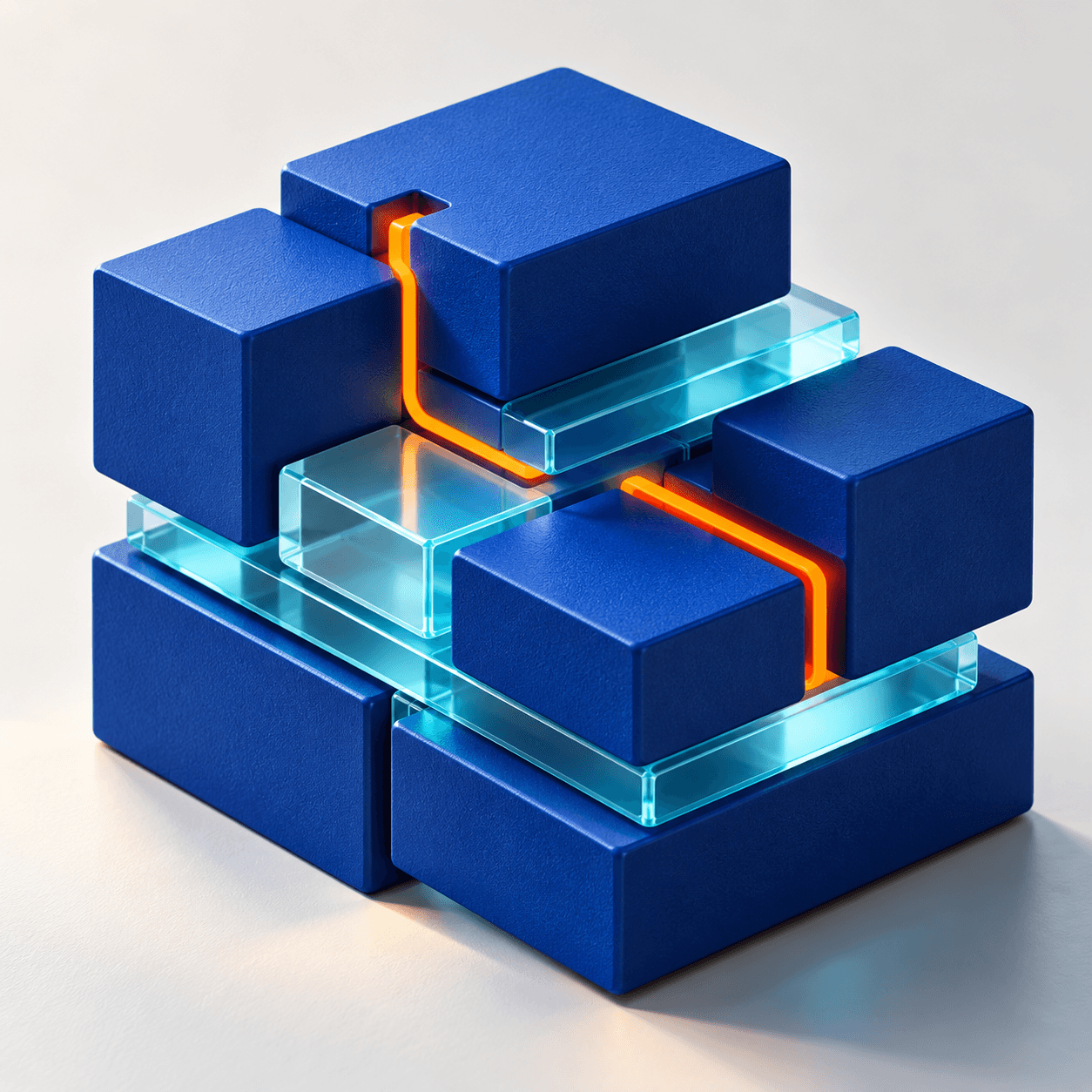

How a practical design system gives product teams consistency without making every experience feel rigid.
Consistency is a user benefit
When patterns behave consistently, people learn a product once and carry that knowledge forward. Forms, feedback, navigation and actions feel familiar instead of requiring a fresh interpretation on every page.
For teams, this also reduces repeated design and engineering decisions.
Build from real recurring patterns
A design system should grow from the components the product actually needs: buttons, inputs, tables, alerts, content hierarchy and responsive layouts. Starting with a giant catalogue of unused parts creates maintenance without value.
Document when a component should be used, not just how it looks.
Keep room for context
Consistency does not mean every screen should look identical. A good system provides stable building blocks while allowing hierarchy, content and interaction to respond to the job at hand.
Review the system as the product changes, and retire patterns that no longer serve users.
[ Put the thinking to work ]